
Why People Ask What You Ate After You Say You Had Cancer
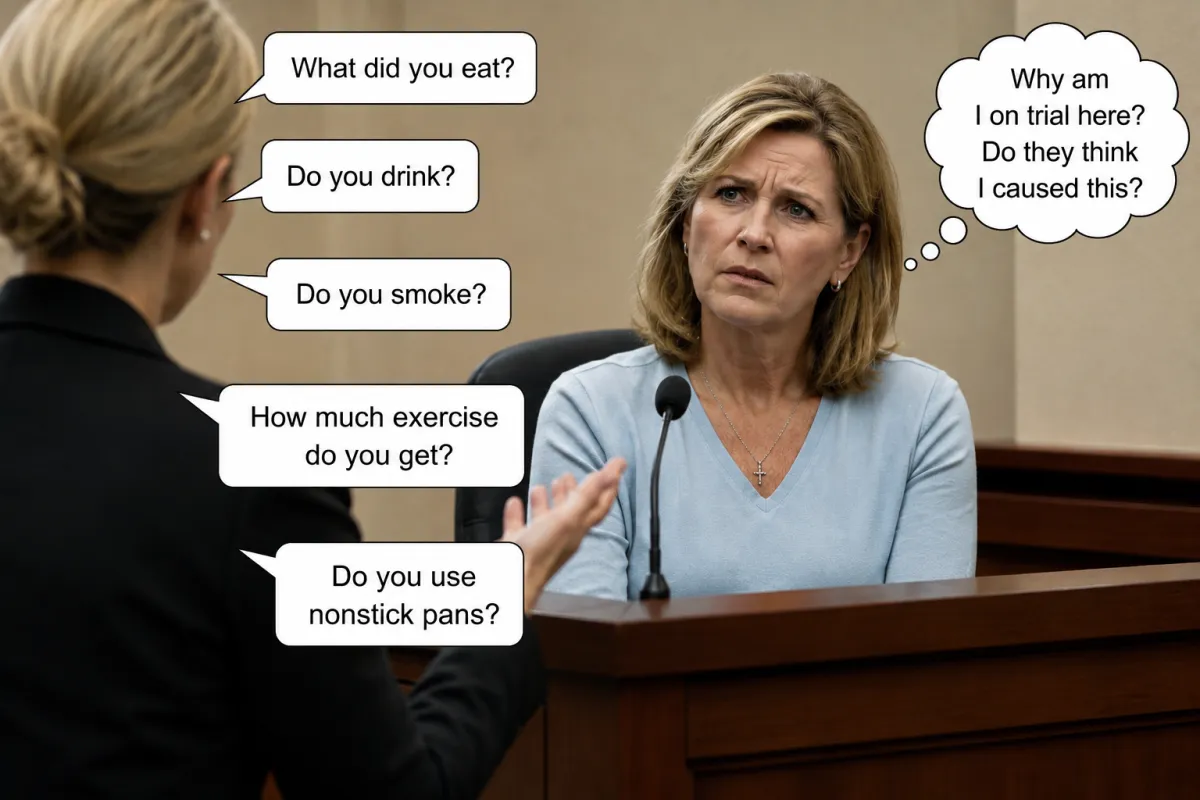
You tell someone you had cancer, and almost immediately, the questions begin.
“What did you eat?”
“What kind of diet did you follow?”
“Did you ever smoke?”
“Were you under a lot of stress?”
“Does cancer run in your family?”
“Did you use XYZ product?”
“Do you think something in your lifestyle caused it?”
Sometimes these questions are asked gently and with concern. Sometimes they may reflect a certain amount of morbid curiosity. But it’s usually not that simple. Often, the person isn’t trying to understand your experience as much as they’re trying to reassure themselves.
Cancer is terrifying. It reminds people that bodies are vulnerable, bad things happen, and no amount of planning, research, green juice, exercise, or positive thinking can give anyone complete control over what happens next. Your cancer reminds them of their own mortality. What happened to you could happen to them.
That’s a deeply uncomfortable reality, so the brain starts looking for an escape route. It searches for differences between your life and theirs, trying to put as much distance as possible between whatever might have contributed to your cancer and them.
So the brain begins gathering evidence. Maybe you ate something they don’t eat. Maybe you smoked and they don’t. Maybe you were more stressed than they are. Maybe you didn’t exercise enough, or you weigh more than they do. Maybe you used the “wrong” household products, lived in the “wrong” place, or missed some warning sign. If they can find a meaningful difference between your life and theirs, they may be able to tell themselves they’re safe.
The internal question their brain is trying to answer may be, “What can I find that’s different enough to reassure me this won’t happen to me?”
But that’s probably not the message that reaches you.
What you hear is, “What did you do to cause this?”
Those are two very different messages, filtered through two very different lenses. Their lens is, “I don’t want this to happen to me.” Yours is tuned in to anything that sounds like blaming the victim. You may be especially vulnerable to that implication because, like so many people who have had cancer, part of you may also have wondered whether you did something to cause it.
And that can hurt. You’ve already dealt with the fear, appointments, decisions, treatments, side effects, uncertainty, and grief that come with cancer. You don’t need to feel like you’re on trial on top of that.
Yes, some behaviors and exposures are associated with an increased risk of certain cancers. That doesn’t mean there was one simple, single cause of yours, and it certainly doesn’t mean you’re to blame.
I know there were factors in my life that may have increased my risk. I’ve chosen to change some of them. But taking responsibility for my future choices doesn’t require me to blame myself for my past.
People can do everything “right” and still get cancer. Others can have multiple risk factors and live to be a hundred. Human biology is complicated. Cancer is complicated. Your diagnosis isn’t proof that you failed at health, thought the wrong thoughts, ate the wrong food, or lived your life incorrectly. But when someone starts asking these questions, it can be hard not to feel attacked.
So what do you do when someone starts questioning you? You get to decide how much of the conversation you are willing to have.
You might say, “There probably wasn’t one simple cause, and I don’t think dissecting my lifestyle is going to give us an answer.”
Or, “I know you’re trying to understand, but questions like that can sound as though you think I caused this.”
Or simply, “Cancer risk is complicated, and I’d rather focus on where I am now than analyze my past.”
You don’t have to educate everyone, defend your medical history, or justify your choices. And you don’t have to make someone else feel safer by accepting blame that doesn’t belong to you.
These conversations can be surprisingly painful, especially when they happen with people you love. You may understand that their questions come from fear and still feel hurt, angry, judged, or unsure how to respond. Both can be true.
If conversations with friends or family about your cancer leave you feeling blamed, misunderstood, or alone, or you’re struggling to say what you need without creating even more distance, book a call with me. We can talk about how to respond in a way that feels true to you, communicate more clearly, and feel more confident navigating the relationships that cancer has changed.
To receive the blog and content like this right to your inbox, click here:
Write to me at [email protected] to let me know what you'd like help with, or book a call:
Click here to book a "From Surviving To Thriving" Breakthrough Call
Release It! ...Forever/
Thriving Beyond Cancer
Premium Coaching
...With Dr. Jill Rosenthal
Email: [email protected]
Copyright 2025 Release It!...Forever LLC