
When Little Things Feel Like Big Threats: How Cancer Rewires Your Brain—and What You Can Do About It
If the printer jams and your heart starts pounding like you’re in the waiting room on scan day, you’re not “overreacting”—or at least, not without a good reason.
Your reactions make perfect sense in the context of what you’ve lived through.
Your nervous system is doing exactly what it learned to do during and after cancer: protect you by staying on high alert.
That hypervigilance makes tiny glitches feel like five-alarm fires because your brain has been practicing threat detection 24/7.
Fear of recurrence, having lived through bad news (sometimes one blow after another), and constant body scanning for possible symptoms wire the system to assume danger first, proof of safety later.
When your life has imploded and your identity has shifted, the “little stuff” gets bigger. Add low sleep and lower reserves, and small glitches seem like catastrophes.
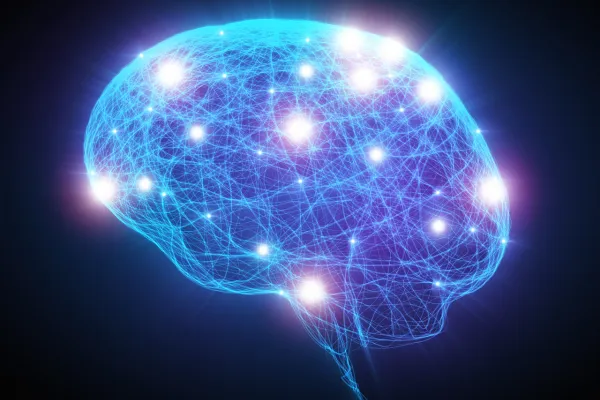
A little neuroscience, in plain English: your built-in alarm (amygdala) learned to fire fast. Your brake system (prefrontal cortex and vagal “calm” pathways) got taxed. When threat feels constant, your brain’s alarm center fires faster and your body’s “calm” pathways take longer to kick in—so even small hassles ping as big danger.
The result? Your brain’s salience network (the brain’s “importance” filter) tags everything as “urgent.” So everyday bumps—emails, traffic, a weird twinge—feel catastrophic. And there’s a sneaky logic underneath: part of you may worry that if you relax, you’ll miss something important. Tension masquerades as safety. It’s not your fault—your system learned this to protect you.
Here’s the good news: you can turn the volume down without turning vigilance off. Think “responsive, not reactive.”
Here’s what to do about it. Awareness is the first step; retraining your nervous system comes next. Start with the first one listed below, and then pick several of your favorites that work best for you.
Name it. “This is my alarm system, not an emergency. I’m safe enough right now.” That label creates a tiny pause where choice lives.
Two-minute reset. Plant your feet. Inhale for 4, exhale for 6—for ten breaths. Let your eyes slowly scan the room to orient to “here and now.” Name three colors you can see. Small disruptions stop snowballing.
Right-size the problem. Ask, “Will this matter next week?” Zooming out shrinks most “emergencies.” Try this: rate it right now on a scale of 0-10, then imagine it next week. Ask what support would move it down two points.
Build buffers. Hypervigilance feeds on urgency. Add time cushions and simplify logistics so tiny delays don’t tip you over. Let your nervous system spend some time running a little more slowly. Examples: leave an extra 10 minutes for transitions. Batch emails twice a day (and turn off notifications).
Stop white-knuckling it alone. Reach out—yes, even for “small stuff.” Let people help you. Interdependence calms a system that’s been carrying everything.
Micro-boundaries. Say “not today” to nonessential asks and tasks. Put space in your calendar and give your nervous system time to settle. Good enough is good enough; chasing “perfect” keeps the alarm on.
Plan for hotspots. If mornings or appointments spike your stress levels, do a little pre-work the night before—future you will thank you, and your brain will register less threat. Do this within reason: if a five-minute morning task takes thirty at night, try another approach. Knowing your psychology (“I panic in the morning”) and your energy patterns will help. If evenings are exhausted, do a 60-second “layout” only (keys, meds where you won’t forget them, outfit).
Remember: your stressful moment (traffic, the inbox, the missing sock, the cat barfing as you’re leaving) isn’t proof that life is falling apart; it’s a mirror of your current state. Calm the state and the size of the problem shrinks.
You deserve a life that isn’t lived from one crisis to the next, always braced for the worst. It’s possible to feel safe again and be present now. Ironically, a calmer nervous system notices what matters more reliably than one that’s constantly scanning for danger.
The good news: Safety is a skill your body can relearn.
If you’re ready to retrain your nervous system—and you don’t want to do it alone—I’m here. Let’s help your body learn calm, your mind trust the quiet, and your life expand beyond fear. Email me to find out more.
To receive the blog and content like this right to your inbox, click here:
Write to me at [email protected] to let me know what you'd like help with, or book a call:
Click here to book a "From Surviving To Thriving" Breakthrough Call

Release It! ...Forever/
Thriving Beyond Cancer
Premium Coaching
...With Dr. Jill Rosenthal
Email: [email protected]
Copyright 2025 Release It!...Forever LLC