
Why Reassurance Alone Can’t Stop the Fear of Your Cancer Coming Back
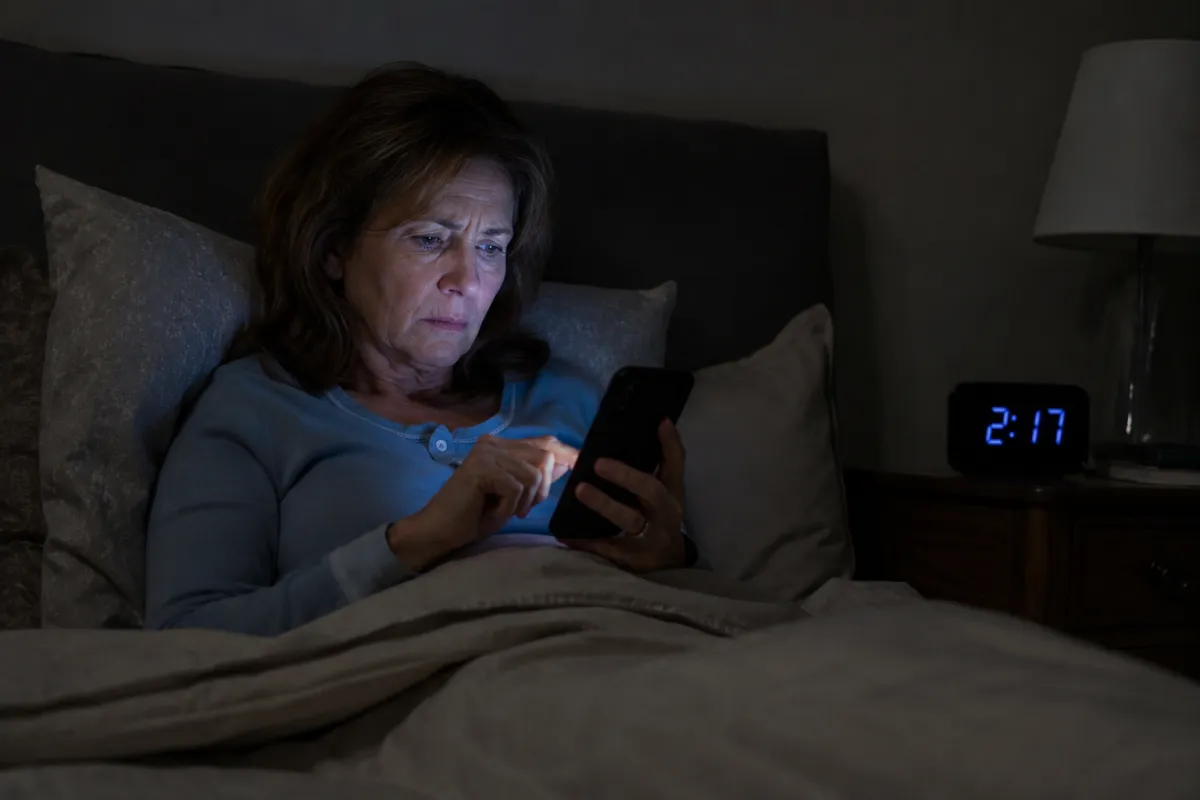
It’s 2:17 in the morning.
You’re awake because you felt something. Or maybe you woke up to go to the bathroom. Or because of a hot flash. And then you felt something.
A twinge. A pressure. An ache that may have been there yesterday, although now you’re not sure.
You tell yourself it’s probably nothing.
Then your brain says, “But what if it isn’t?”
So you start thinking.
When did it begin? Is it getting worse? Is it near the place where the cancer was? Or, even worse, if it’s somewhere else, could it be a distant metastasis? Can it wait until your next appointment? When is your next appointment, anyway?
Maybe you reach for your phone. You tell yourself, “Just one quick search.”
An hour later, you have six tabs open, your heart is racing, and you’re trying to decide whether the people on Reddit are more trustworthy than the doctor who told you everything looked fine.
Sound familiar?
You’re not doing this because you’re dramatic or irrational. You’re doing it because you’re intelligent, resourceful, and accustomed to solving problems by gathering information.
That approach has probably served you well for most of your life.
But fear after cancer is not a research project.
You can know the statistics. You can understand the difference between possibility and probability. You can remind yourself that your scans were clear and your doctor was reassuring.
And you still may not feel safe.
Because understanding risk is not the same as feeling safe.
And you cannot always think your way out of an emotional problem.
This can be especially frustrating when you’re used to solving difficult things with your brain. Research has helped you make good decisions. Logic has helped you build a life, manage responsibilities, and navigate complicated situations.
So when fear shows up, you naturally try to reason with it.
But that doesn’t always work.
Before cancer, you may have believed that your body could be trusted. You believed that life made sense. You believed that if you followed the rules and did everything “right,” you would be protected.
Then cancer happened anyway.
So now part of you stays on guard. Your nervous system is still on alert. It learned that danger can arrive without warning. Now it may interpret every symptom, appointment, or unfamiliar sensation as a potential threat.
It watches every sensation. It looks for clues. It whispers that relaxing would be irresponsible because you might miss something. It tells you that only constant vigilance can protect you.
No wonder you can’t stop thinking about it.
You cannot argue that visceral response into submission.
But here’s the tough-love part: one more hour of researching is probably not going to give you the safety you are looking for.
Reassurance may calm you temporarily. Then another ache, scan, appointment, or thought of cancer (whether yours or someone else’s) sends the fear flooding back.
That’s because the fear doesn’t need a stronger argument.
It needs care.
The next time the spiral begins, pause and ask:
“Is there a medical action I need to take, or is a frightened part of me asking for help?”
If there’s a new or concerning symptom, contact your medical team.
But if you already have the information, stop trying to find more.
Put down the phone.
Don’t continue following the thought or try to force it out of your mind. Instead, bring your attention to what is actually happening in your body.
Where do you feel the fear?
Is it tightness in your chest? A knot in your stomach? Heat in your face? A buzzing, restless feeling under your skin?
See whether you can notice the sensation without immediately turning it into a story about what might happen. Breathe slowly and allow it to be there for a moment. Not because you like it. Not because it means the fear is true. But because fighting the sensation often gives it even more power.
Then notice what happens.
Does it shift? Move? Soften even slightly?
Emotions rise, peak, and change when we allow ourselves to experience them without continually adding more frightening thoughts. You’re not trying to make the feeling disappear on command. You’re showing your nervous system that you can feel fear without immediately obeying it.
You don’t need to outsmart your fear. And trying to push it away doesn’t work either. At least not for long.
You need to help your mind and body learn that fear does not have to run your life.
If you’re tired of researching, reasoning, and reassuring yourself only to end up back in the same fearful place, reach out and let’s talk. I help people move beyond the endless mental arguments so they can release fear, feel safer in their lives, and stop letting cancer occupy so much of their precious mental space.
And when you need support in the moment, especially when your thoughts start spiraling at 2:17 in the morning, my Cancer Chatter Reset app can help you interrupt the mental loop, reconnect with what you are feeling, and choose a calmer next step.
To receive the blog and content like this right to your inbox, click here:
Write to me at [email protected] to let me know what you'd like help with, or book a call:
Click here to book a "From Surviving To Thriving" Breakthrough Call

Release It! ...Forever/
Thriving Beyond Cancer
Premium Coaching
...With Dr. Jill Rosenthal
Email: [email protected]
Copyright 2025 Release It!...Forever LLC