
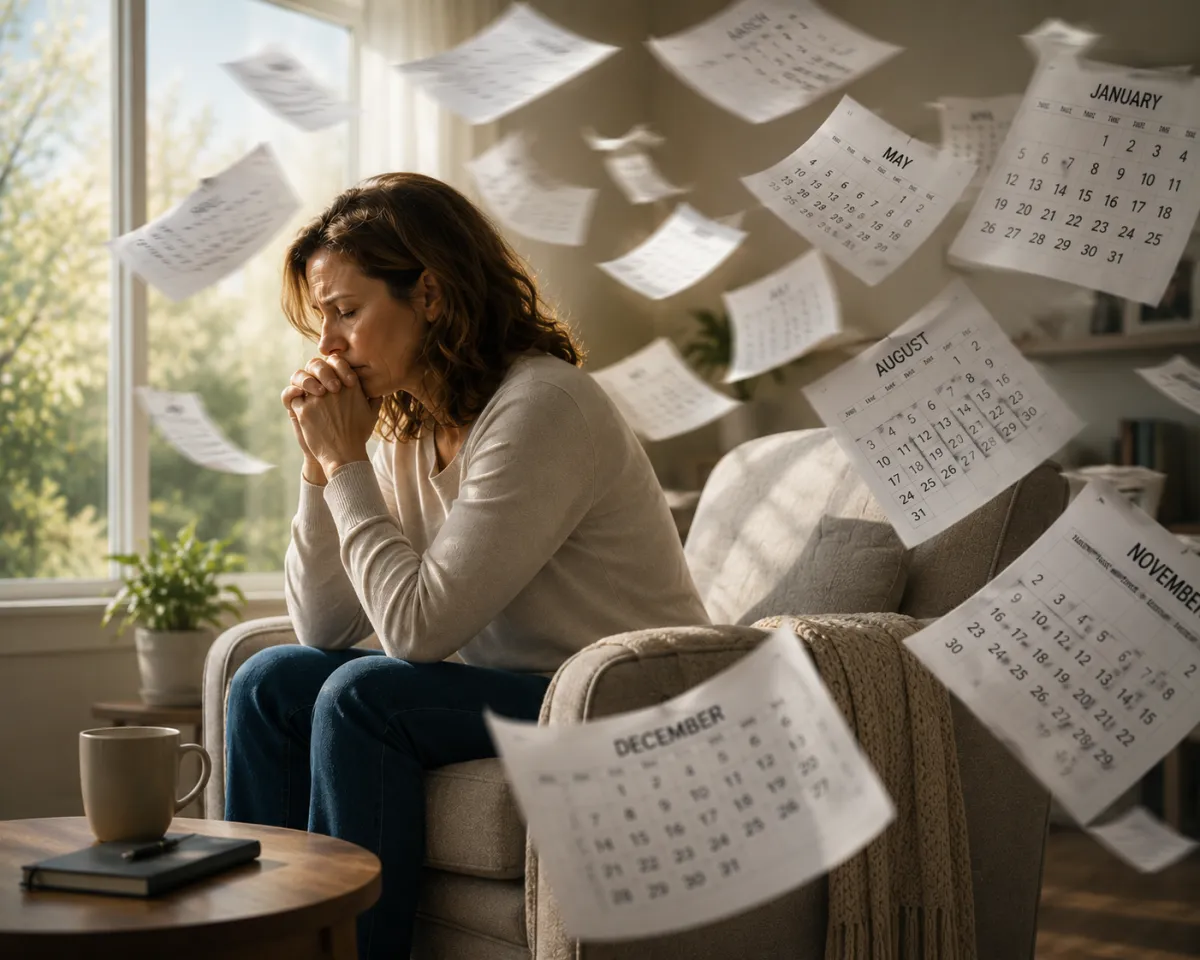
What If Fear After Cancer Didn’t Have to Take Years to Fade?
Most people assume fear after cancer is something that goes away after enough time passes. And to be fair, sometimes it does get better with time. And many people who have had cancer don’t think it will ever go away, no matter how long they wait.
For some people, the fear gradually softens as more months and years pass. The scans keep coming back clear. The appointments get farther apart. Life starts to feel a little more normal again.
But what if you didn’t have to wait years?
What if time wasn’t the only option?
Imagine you’re standing in a long security line at the airport.
You sigh. You shift your bag, which feels like it’s getting heavier by the minute, from one shoulder to the other. You check the time. You look at the line snaking around the corner and start to worry about getting to your gate on time.
You think to yourself, Well, I guess this is just how long it’s going to take.
Then someone walks past you, sees the expression on your face, and says, “You know you can get TSA PreCheck and skip that long line, right?”
You turn and look at them. “Huh?”
No one told you there was another option.
You weren’t doing anything wrong. You weren’t in the wrong airport. You weren’t failing at travel. You were simply standing in the line almost everyone stands in because it’s the only one they know about.
Now, I know by now everyone knows about TSA PreCheck. And if you travel a lot, you probably have it and love it.
But humor me.
Think back to what it felt like the first time you learned about it. Or the first time you blew through security while everyone else was still waiting in that long, winding line.
That’s how I think about fear after cancer.
Most people believe time is the only path to feeling better. So they wait, hoping that enough clear scans, enough months, or enough years will eventually quiet the fear. They wait, hoping for enough proof that maybe, finally, they can exhale.
And sometimes, that works.
But not always.
I’ve worked with women who are ten or even twenty years beyond their diagnosis and still feel their stomach drop every time something reminds them of cancer, whether it’s their cancer or someone else’s.
Every encounter with the medical system brings fear. Every new ache still gets mentally filed under, What if it’s back? Every unexplained symptom still sends their brain down the same dark hallway, wondering which door the bogeyman will jump out of.
Time passed.
But the fear didn’t.
Because fear after cancer isn’t just a function of time. And it’s not weakness. It’s not you being dramatic or ungrateful or “unable to move on.”
It’s your brain and nervous system doing exactly what they were trained to do during one of the most frightening experiences of your life.
They learned: This body is not completely safe.
They learned: Things can change in an instant.
They learned: Stay alert. Stay vigilant. Don’t miss anything.
So it makes sense. Of course you’re watching every symptom. Of course scan season feels awful. Of course your mind tries to prepare for the worst.
Your brain is trying to protect you.
But protection can start to become a prison.
At some point, the vigilance that once made sense may begin taking over your thoughts, stealing your sleep, your joy, and your ability to actually live the life you fought so hard to keep.
And here’s the part I really want you to hear:
Learned patterns can be changed.
That’s the shortcut.
No magic wand. No pretending it didn’t happen. No erasing what you’ve been through. And not because fear will never show up again. It may knock on your door. But you don’t have to answer it. And it doesn’t have to move in and take over.
You do not have to stand in the regular line forever, hoping that eventually the fear gets tired or bored and wanders off on its own. You can actively help your brain and nervous system learn something new.
That doesn’t happen by just telling yourself to calm down. If that worked, you probably would have done it already.
In my work, I help you reset your nervous system so the things that used to trigger that immediate, visceral wave of fear don’t hit you in the same way anymore.
So instead of trying to talk yourself out of fear every time a trigger shows up, your body and nervous system can learn to experience those moments without sounding the alarm or sending you straight into fear.
You can teach them:
I can notice without spiraling.
I can care about my health without living in constant dread.
I can take symptoms seriously without assuming the worst.
I can go to scans without handing over my entire emotional life for weeks beforehand.
This is not about pretending cancer wasn’t terrifying. It was.
This is not about toxic positivity or forcing yourself to “just be grateful.”
This is about recognizing that fear may have taken up more space than it deserves. And you may have more power than you realize to change your relationship with it.
Time may help. But time alone is not the only path.
You don’t have to spend years hoping you’ll eventually reach the front of the line. You may be closer than you think. And you don’t need to wait for fear to disappear before you start living.
Maybe the first step is simply asking:
What if there’s another way?
What if there’s a faster line?
What if fear doesn’t get to be in charge anymore?
Because fear doesn’t have to be in charge. You get to be in charge. And you don’t have to keep waiting.
If you’re ready to step out of the shadow of cancer, there may be a shorter path than waiting for fear to fade on its own. Click here to book a complimentary session, and let’s talk about what’s possible.
To receive the blog and content like this right to your inbox, click here:
Write to me at [email protected] to let me know what you'd like help with, or book a call:
Click here to book a "From Surviving To Thriving" Breakthrough Call
Release It! ...Forever/
Thriving Beyond Cancer
Premium Coaching
...With Dr. Jill Rosenthal
Email: [email protected]
Copyright 2025 Release It!...Forever LLC