
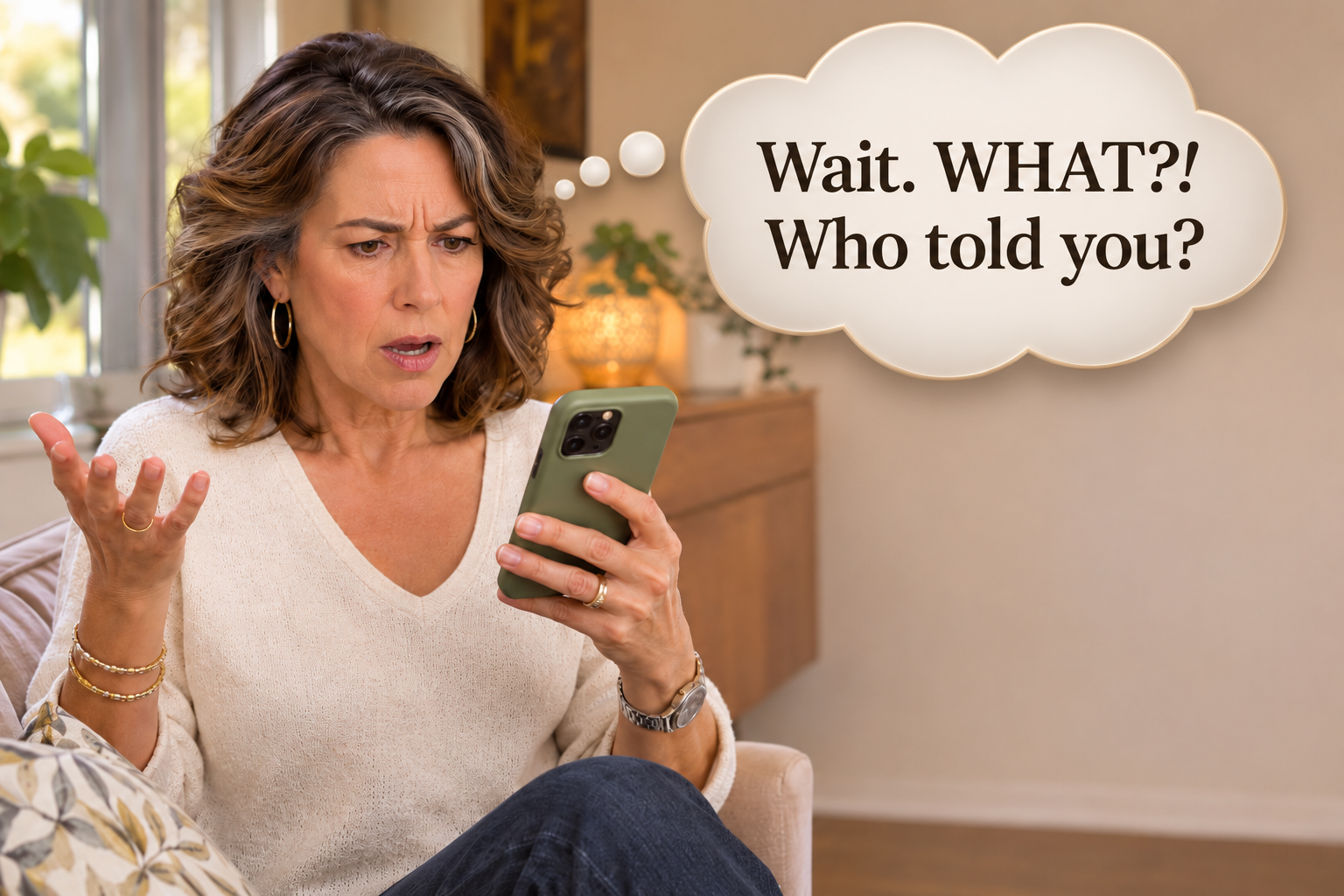
Why Does Everyone Think Your Cancer Is Public Information?
You tell a close friend about your cancer diagnosis. You trust her. You need someone to talk to, and you're grateful she's there for you.
Then, a few days later, you get a text from someone you haven't spoken to in years.
“I just heard about your cancer! How are you doing?”
Wait. WHAT?!
How did she find out? Who told her? And why does everyone suddenly seem to know something you never intended to share?
As if dealing with cancer isn't enough, now you're dealing with the emotional fallout of having your private medical information become public knowledge.
And you're angry. Hurt. Maybe even feeling betrayed.
Here's the thing. Your cancer diagnosis is YOUR information. Not community property.
But deciding who gets to know isn't always as straightforward as it sounds.
On one hand, telling people can be incredibly freeing. You don't have to make excuses for why you're exhausted, missing work, or not showing up the way you used to. You can receive support, understanding, and practical help. And you might discover that people you never expected to be there for you really step up.
On the other hand, sharing can open the floodgates to unsolicited advice, uncomfortable questions, pity, or people telling you about their cousin's neighbor who had the same cancer and died. (Seriously, people?!)
And then there's the pressure of managing everyone else's emotions when you're barely managing your own.
So maybe you decide to keep your diagnosis private.
That can feel empowering. You're protecting your energy, maintaining some normalcy, and deciding how much cancer gets to intrude into the rest of your life.
But privacy can also feel isolating. You might find yourself making excuses, pretending everything's fine, or feeling resentful that nobody's offering help when they don't even know you need it.
See the dilemma?
There's no perfect choice. And there's no universal right answer.
So how do you decide?
Instead of asking yourself who should know, try asking who you want to know.
Who makes you feel safe? Who can listen without trying to fix you? Who will respect your boundaries? And who might actually make your life easier rather than more complicated?
You can also decide how much to share. Someone might need to know you're undergoing treatment without knowing your prognosis, test results, or every detail of your medical history.
And here's something important: Giving someone information doesn't give them permission to pass it along.
You can say, “I'm telling you because I trust you, but I'm not ready for other people to know. Please keep this between us.”
If someone has already shared your news without permission, you're allowed to be upset. You can acknowledge that they may have meant well while still telling them that what they did wasn't okay.
And if you change your mind about who knows? That's okay, too.
Cancer has probably already taken away more of your sense of control than you'd ever imagined. You don't need to surrender control over your personal story as well.
The goal isn't to build walls so high that nobody can reach you. It's to create boundaries that protect your privacy without cutting you off from the connection and support you deserve.
So, where are you drawing the line between privacy and connection? And are you making that choice because it's what YOU want, or because you're worried about what everyone else will think?
Remember, this is your life. Your health. Your story.
You get to decide who gets invited into it.
And of course, this isn't just about who knows about your cancer.
Where else in your life are you letting other people decide what's okay for you? Where are you saying yes when you really want to say no, keeping quiet to avoid upsetting someone, or putting everyone else's feelings ahead of your own?
Learning to set boundaries that protect you without shutting people out can change so much more than how you handle conversations about cancer. It can change your relationships, your stress levels, and how much control you feel you have over your own life.
If this resonates with you, and you're finding it difficult to set boundaries without feeling guilty or worrying about disappointing people, I'd love to talk. We can explore what's getting in your way and what might be possible if you started making more decisions based on what you want and need.
You don't have to figure it all out alone. Let’s talk.
To receive the blog and content like this right to your inbox, click here:
Write to me at [email protected] to let me know what you'd like help with, or book a call:
Click here to book a "From Surviving To Thriving" Breakthrough Call
Release It! ...Forever/
Thriving Beyond Cancer
Premium Coaching
...With Dr. Jill Rosenthal
Email: [email protected]
Copyright 2025 Release It!...Forever LLC