
When You Have Cancer—and Someone You Love Is Seriously Ill Too
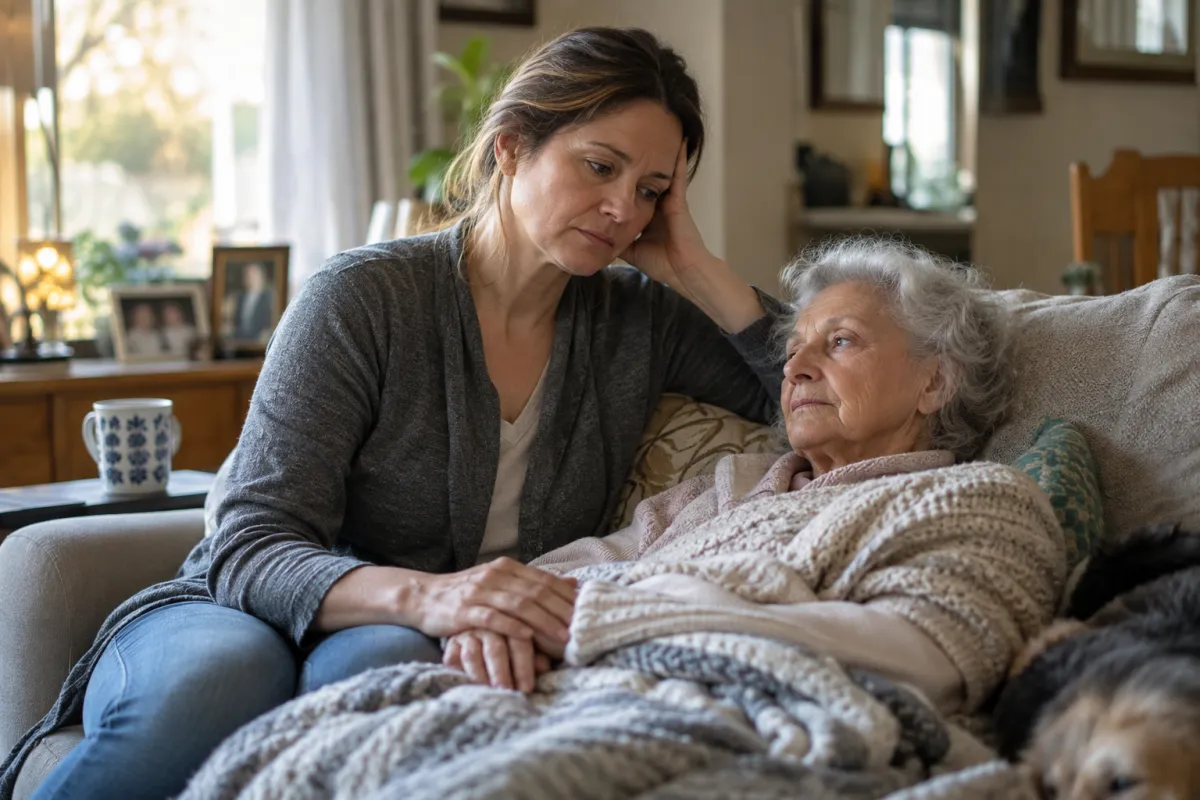
There’s something particularly cruel about being diagnosed with cancer when you’re already taking care of someone else.
Suddenly, you’re the patient. You have appointments, scans, treatments, side effects, fears, and a body that may no longer cooperate with your plans.
And yet… someone still needs you.
Maybe it’s a spouse, a parent, a child, or another family member. You’re trying to keep track of their medications while remembering your own. You’re worrying about their next appointment while waiting for your scan results. You’re exhausted—but there are still things that have to be done.
It creates this impossible-feeling tension of needing care while simultaneously being the person someone else depends on.
How exactly are you supposed to take care of yourself when you’re responsible for taking care of somebody else?
I understand this conflict personally. Caring for my husband as he lived with Alzheimer’s taught me how relentless caregiving can be. There isn’t necessarily an “off” switch at the end of the day. And when you add your own cancer diagnosis or treatment to that equation, the emotional and physical load can become enormous.
This isn’t merely an inconvenience. Caregiver stress can affect your health.
Research on family caregivers consistently shows significant levels of emotional stress, sleep disruption, and poorer health among caregivers. And when you’re already dealing with cancer, protecting your own physical and emotional well-being isn’t exactly optional.
That means something may have to change.
Not necessarily everything. And certainly not overnight.
But start asking different questions.
What truly has to be done by you?
What could somebody else do—even if they don’t do it exactly the way you would?
Where could you accept help instead of automatically saying, “I’m fine”?
Could someone drive to an appointment, make dinner, sit with your family member, pick up groceries, handle paperwork, or simply give you two uninterrupted hours?
And please remember: rest is NOT the reward you get after everyone else is taken care of.
You are one of the people who needs taking care of.
Protect your medical appointments. Keep your own health needs on the calendar. Prioritize sleep, food, movement when possible, and moments when you are not responsible for another human being. Look into respite care, caregiver support groups, family help, and professional resources.
And perhaps hardest of all, let other people help.
You may be used to being the capable one. The person who handles things. The one everyone counts on.
But cancer changes the equation.
Caregiving changes the equation.
Having both happening at once really changes the equation.
So stop using “I should be able to handle this” as the measuring stick.
You don’t have to prove how strong you are by running yourself into the ground.
Sometimes strength looks like saying, “I need help.”
And allowing someone to give it.
If you’re trying to navigate cancer while caring for someone you love—and you’re exhausted, overwhelmed, guilty about putting your own needs on the list, or simply wondering how much longer you can keep doing all of this—I’d love to support you.
Book a call with me, and let’s talk about how you can protect your own well-being, ask for and accept the support you need, and create a way forward that doesn’t require sacrificing yourself in the process.
To receive the blog and content like this right to your inbox, click here:
Write to me at [email protected] to let me know what you'd like help with, or book a call:
Click here to book a "From Surviving To Thriving" Breakthrough Call
Release It! ...Forever/
Thriving Beyond Cancer
Premium Coaching
...With Dr. Jill Rosenthal
Email: [email protected]
Copyright 2025 Release It!...Forever LLC