
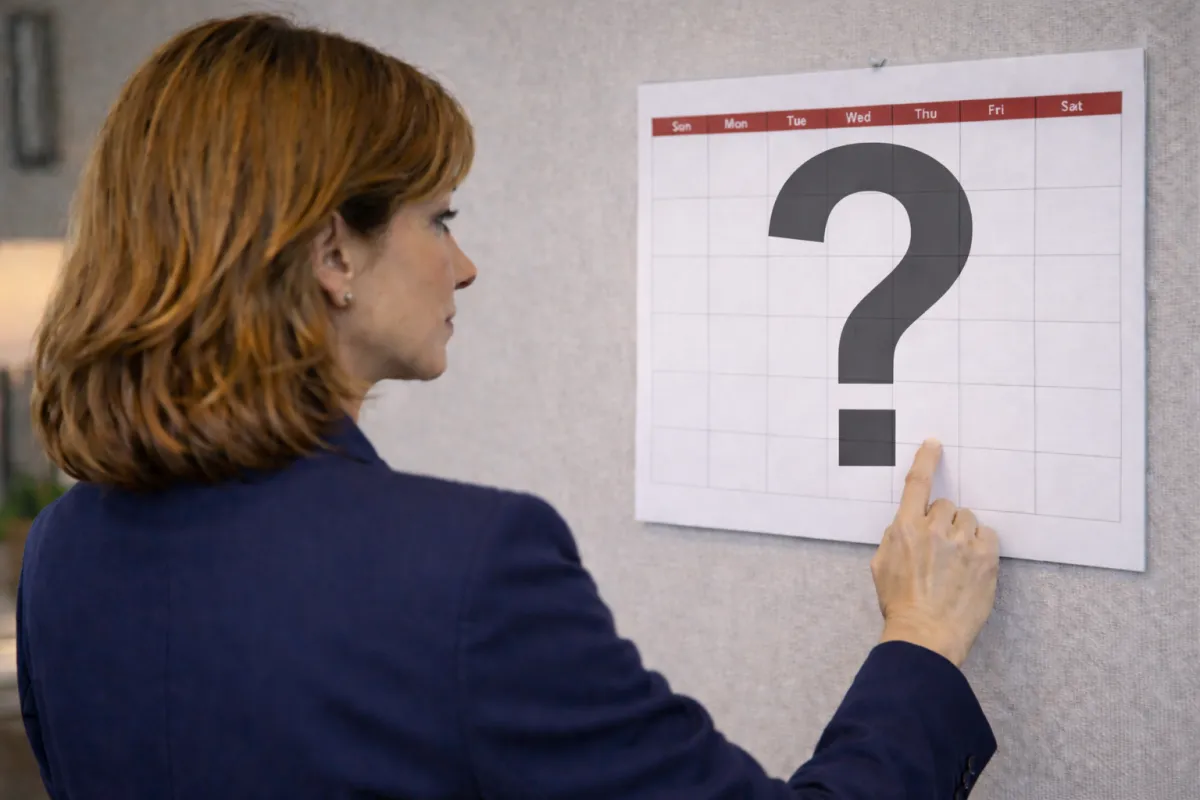
Returning to work after cancer, Part 0: When (and whether) to go back during treatment
This is part 0 of a three-part series on returning to work after a cancer diagnosis. Why part 0? Because I already published part 1 and scheduled part 2 before realizing I was missing an important first step. Blame it on chemo brain if you like.
After a cancer diagnosis—sometimes when you’re planning treatment, and sometimes when you’re in the middle of it—the time comes when you try to figure out when to return to work. During treatment? Or if not during, how soon after?
This brings up a number of questions:
When will you be physically able to return?
When will you be mentally and emotionally ready?
And…are you choosing an early return date because you love your work… or because you feel like you’re supposed to?
Many women describe their work as grounding. Identity-protecting, comforting, or something they need to do to keep themselves sane. And it can also be a pressure cooker of obligation, guilt, and “they need me.”
So let’s say this out loud: if you don’t take care of yourself now, when are you going to take care of yourself?
Here’s the thing: your body is not a reliable fortune teller right now.
One of the trickiest parts about planning a return is that when you’re home—with fewer demands, fewer interruptions, more control, more rest—it’s easy to overestimate what you’ll be able to do once you’re back “in the thick of it.”
Work isn’t just tasks. It’s people. Noise. Decisions. Transitions. The constant low-grade urgency.
So even if you’re feeling okay at home, plan as if your stamina will be less predictable at work.
A good rule: return with a lighter schedule than you think you’ll need. It’s much easier to add hours, clients, patients, classes, or other responsibilities than it is to cancel them once you’ve committed—especially if you care about other people and hate letting them down. (Most of you reading this? Yeah. You. I’m talking to you.)
After surgery, healing is a full-time job. It’s not just about when you are no longer in pain. It’s about fatigue, stamina, mobility, brain fog from anesthesia, sleep disruption, and the emotional crash that can come once the adrenaline wears off.
So rather than “How soon can I get back?” consider:
What parts of my job are physical? (walking, standing, commuting, procedures, lifting, being “on” for long stretches)
What parts are cognitive? (decision-making, multitasking, high-stakes problem solving)
What parts are emotional? (people-facing work, conflict, care-taking, heavy conversations)
If you do go back early, think partial return at first: fewer hours, fewer high-stakes responsibilities, fewer “on your feet” demands, fewer meetings. Start with what’s most contained and easiest to control. Start with what’s easiest to cancel or back out of, if it turns out your vision of how much you’ll be able to do doesn’t match reality. You can always add more if you find out you’re feeling better than expected. Just don’t decide that after only a day or two.
Some people work through radiation and feel okay at first—then gradually get hit with that bone-deep, crushing, overwhelming exhaustion as the weeks go on. With radiation, the fatigue is often cumulative. More than once, I dozed off mid-sentence while doing teledermatology consults during radiation. Once, I fell asleep sitting up while holding a cup of tea (fortunately, it was nearly empty, and my laptop survived).
So if you plan to work during radiation, build in wiggle room:
work part-time if possible
keep your schedule “expandable” (you can always add later)
avoid stacking intense days back-to-back
protect your recovery time after treatments
The key is not “Can I do it this week?” but “Can I still do it in week four… five… six?”
Some people can work during chemo. Others can’t. And even within the same person, it can change from cycle to cycle. Part of the issue with chemo is that how you will respond or whether you’ll have a side effect that unexpectedly lands you in the hospital is unpredictable.
It often depends on the regimen and rhythm:
If treatment is every three weeks, some people feel best in the third week leading up to the next infusion.
Some feel okay the day right after treatment and worse the next day.
Side effects often start earlier and last longer with successive cycles. For example, I felt okay the day after treatment (probably due to all the steroids) and then felt horrible the afternoon of day 3. But with the 4th cycle, I crashed the afternoon of day 2, the day after treatment.
This is a great place to ask your oncologist what tends to happen with your specific regimen—but remember: each person is different.
And chemo comes with a wildcard that work plans don’t love: infection risk. When your white blood count is down, a fever can mean urgent evaluation or hospitalization. That can interrupt even the best schedule and the best intentions.
If your work puts you around lots of people—clients, patients, students, customers, coworkers—this is a real factor. They could be a source of infection, and they may also be people you’d have to cancel on with little notice. This doesn’t automatically mean “don’t work,” but it does mean: plan for the possibility that you might need to stop suddenly.
This is also where a robust backup coverage plan is crucial—especially if other people depend on you. If your absence creates a pinch—teaching, patient care, legal clients, retail shifts, leadership roles—you need more than “I’ll see how I feel.”
You need a coverage plan that is:
specific (who covers what)
realistic (they actually can)
immediate (not “maybe someone could…”)
shame-free (you don’t have to justify using it)
During treatment, things can change in an instant and if your work situation can’t adapt to that, you need a plan for it.
The gut-check question: When someone tells me they “have” to work during treatment, I usually ask: What’s the reason?
Is it money? Benefits? Keeping a license active? A sense of normalcy? Loving the work? Not wanting to be alone with your thoughts? Not wanting to disappoint people?
All of those are human reasons. None of them are wrong. But they’re not always worth the cost. They need to be weighed against the reality that rest is not a luxury right now. It’s part of treatment.
And if you’re stuck, try this:
What advice would you give your sister? Your daughter? Your best friend?
Say it out loud. Then see if you can take your own advice.
You don’t have to prove anything. You’re allowed to love your work and take care of yourself. You’re allowed to step back without guilt. You’re allowed to return slowly. You’re allowed to change your mind.
And you’re allowed to build a plan that assumes you’re human—not superhuman.
If you want help mapping out a return-to-work plan around your actual treatment schedule, energy patterns, and real-world responsibilities (including backup coverage), let’s talk. You don’t need to guess your way through this alone.
P.S. If you missed part 1 of the series, you can read it here: Returning to work after cancer, Part 0: When (and whether) to go back during treatment
To receive the blog and content like this right to your inbox, click here:
Write to me at [email protected] to let me know what you'd like help with, or book a call:
Click here to book a "From Surviving To Thriving" Breakthrough Call
Release It! ...Forever/
Thriving Beyond Cancer
Premium Coaching
...With Dr. Jill Rosenthal
Email: [email protected]
Copyright 2025 Release It!...Forever LLC